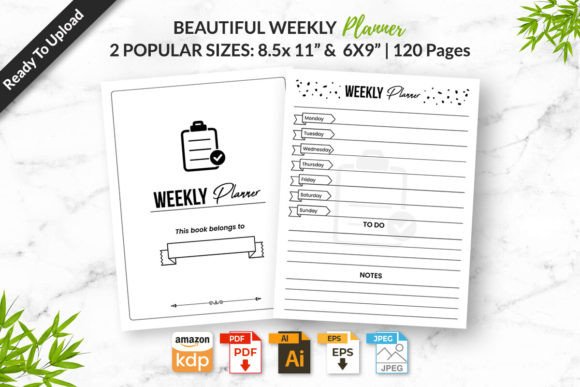
Weekly Planner Logbook KDP Interior Guide
A weekly planner logbook formatted as a KDP interior is a pre-built template designed for Amazon’s Kindle Direct Publishing platform. If that sounds highly specific, it is. But the usefulness of this resource extends far beyond the publishing niche. For a self-publisher, it represents a low-cost, fast route to market. For a busy professional, it is a carefully structured productivity tool they can print on demand. The designation “free” makes it an especially practical starting point, whether your primary goal is commercial or personal.
What makes this type of template different from a generic weekly planner PDF is the underlying architecture. A proper KDP interior includes specific margins, bleed settings, and trim sizes required by Amazon’s print engines. This means the final printed book looks clean, professional, and ready for sale — or ready for your own desk. Understanding what you are getting and how to evaluate it matters regardless of whether you intend to sell it or use it.
What a Free KDP Interior Offers to Self-Publishers
If you are exploring print-on-demand publishing, a free weekly planner logbook KDP interior is one of the most practical tools you can download. The low-content book model relies heavily on volume and niche testing. Investing heavily in custom design for every single niche idea is rarely feasible early on.
A free template eliminates the financial risk. You can take a layout, apply it to a specific niche — a minimalist weekly log for freelancers, a floral-themed planner for hobbyists, a simple undated logbook for students — and publish a test book within hours. This speed to market is a distinct advantage. You validate demand before committing resources.
However, not all free interiors are equal. When evaluating a free weekly planner logbook KDP interior from a publishing perspective, prioritize the following:
- Commercial license: Confirm that the license allows you to sell the final product. Most free templates intended for KDP do, but it is essential to check the terms.
- Formatting integrity: Check that the PDF has correct bleed (0.125 inches), no critical content in the safe zone margins, and proper trim size formatting (6x9, 7.5x9.25, or 8.5x11 are common).
- Editability: Can you easily add your own cover, branding, or niche-specific pages? A free template that is locked or overly complex may cost you more time than it saves.
For a beginner KDP seller, starting with a free, clean, undated weekly planner logbook is a smart strategy. It lets you learn the publishing workflow — uploading, setting pricing, running promotions — without the pressure of a large design investment. For a seasoned publisher, free interiors serve as a baseline. You might use them to enter a trending niche quickly while your custom designs are in development.
Adapting a Weekly Logbook for Professional Productivity
Many professionals and freelancers overlook KDP interiors as personal tools. The formatting is often superior to generic printable PDFs because it is built for commercial print quality. If you run a small business, freelance operation, or manage multiple projects, a structured weekly logbook can replace scattered digital notes.
A freelance graphic designer, for example, might use a weekly planner logbook to track project phases, client calls, and administrative tasks in a single physical spread. The act of writing offloads mental clutter. A solopreneur might print a fresh logbook every quarter, using the consistency to build a reliable planning habit.
When choosing a free weekly planner logbook KDP interior for personal use, the priorities shift away from commercial license and toward layout usability:
- Task vs. time layout: Do you need an hourly breakdown for scheduling deep work, or a prioritized task list for flexible days? Some interiors offer both, while others specialize in one format.
- Paper size and binding: An 8.5x11 book offers more writing space but is less portable. A 6x9 size fits in most bags. Consider whether you will spiral-bind it or have it perfect-bound.
- Notes and reflection space: A dedicated notes section on each weekly spread is invaluable for professionals who need to capture non-task items — meeting takeaways, brainstorming points, or expense notes.
Speed and reliability matter here. A free template that requires no reformatting or adjustment saves time. You can upload it directly to Amazon, order a single proof copy for yourself, and have a professional-grade planner on your desk within days. That direct usefulness is often overlooked by people who assume KDP interiors are only for resale.
Using a Weekly Logbook as an Educator or Hobbyist
Educators and hobbyists bring a different set of priorities to a weekly planner logbook. The focus is on consistency, reflection, and long-term tracking rather than rapid publishing or client billing. A teacher planning a semester of lessons benefits from a dated or undated logbook that provides a predictable structure week after week.
A consistent weekly format reduces decision fatigue. Instead of recreating a planning system every Monday, you fill in the established template. This is especially valuable for habit tracking, curriculum pacing, or creative project management.
For example, a fiction writer working on a novel might use a weekly logbook to track word count, research tasks, and submission deadlines. A pottery instructor might use it to schedule kiln firings, class prep, and inventory management. The learning value comes from the ability to look back across weeks and identify patterns — when are you most productive, where do bottlenecks occur, how long do specific tasks actually take.
When evaluating a free weekly planner logbook from this perspective, look for:
- Undated flexibility: If you miss a week, an undated logbook does not waste pages. This is critical for personal use where consistency is built over time.
- Supplementary pages: Some interiors include goal-setting pages, habit trackers, or monthly overviews. These extras can significantly enhance long-term usefulness.
- Visual clarity: A clean, uncluttered layout is easier to maintain over months of use. Avoid templates with heavy graphics if you plan to write small notes or track data.
A free template is an excellent entry point for establishing a planning habit. You can test whether a weekly structure improves your workflow before committing to a premium, customized system.
Matching the Template to Your Skill Level and Goals
Not every free weekly planner logbook KDP interior will suit every purpose. The key is matching the template to your specific needs and experience level.
If you are a beginner KDP publisher, prioritize simplicity. A free interior with a clean, minimalist design and standard trim size reduces the chance of formatting errors. Focus on learning the upload and pricing process. A dated logbook requires more frequent updates, so start with undated if you want to repurpose the same interior across multiple niches.
If you are a busy professional or freelancer, prioritize layout flexibility. Look for interiors that combine a task list with a notes section. Consider the paper size carefully — do you need portability or writing space? A free template lets you test these preferences without spending money on a custom design that might not fit your workflow.
If you are an experienced publisher, free interiors are useful for market testing. Launch a low-cost or free version of a weekly logbook in a new niche to gauge interest. If it gains traction, invest in a premium, unique design to replace it. This data-driven approach minimizes risk and maximizes learning.
If you are an educator or hobbyist, prioritize consistency. An undated logbook with extra planning pages and a durable layout will serve you for months or years. The cost-free nature means you can try multiple formats — a task-based logbook for work, a time-blocked logbook for creative projects — and keep the one that sticks.
Balancing Quality, Cost, and Purpose
The phrase “free weekly planner logbook KDP interior” implies no upfront cost, but there is always a trade-off. Free templates generally offer less customization than premium ones. The design might be simpler, the licensed uses more restrictive, or the file format less flexible. For many use cases, these limitations are negligible.
If speed and zero upfront cost are your primary drivers, a free template is an intelligent starting point. It allows you to validate a niche, test a productivity system, or learn a publishing workflow with minimal commitment. If deep customization, unique aesthetics, or exclusive commercial rights are required, a free template serves as a benchmark. You will know exactly what features you need to build or buy later.
The most effective approach is to treat a free weekly planner logbook as a tool for learning and discovery. Whether you are publishing your first KDP book or simply trying to bring more order to your workweek, the value comes from fit. A well-matched free template can outperform an expensive mismatched system. Start with clarity on your own priority — commercial value, personal productivity, or long-term structure — and evaluate the template through that lens.