The Enduring Allure of Elegant Wildflower Watercolor in Modern Creative Practice
There is a quiet revolution happening in visual culture, and it is being painted with a wet brush on cold-press paper. Elegant Wildflower Watercolor has emerged as a defining aesthetic force, not merely as a niche artistic technique but as a versatile visual language that speaks across mediums, industries, and audiences. Its appeal lies in a rare combination of spontaneity and precision, where the unpredictable bloom of pigment meets the deliberate structure of botanical form. This article unpacks what makes this approach so compelling, examining its material foundations, its role across professional and personal domains, and the practical considerations that determine success when working with it.
Understanding the Material Logic of Watercolor and Wildflower Forms
Watercolor behaves according to its own physics. Pigment particles suspended in water move across the tooth of the paper, settling where the liquid carries them. The artist guides but cannot fully command. This partial surrender of control is what gives elegant wildflower watercolor its characteristic freshness—each bloom, each stem carries the imprint of the medium's organic movement.
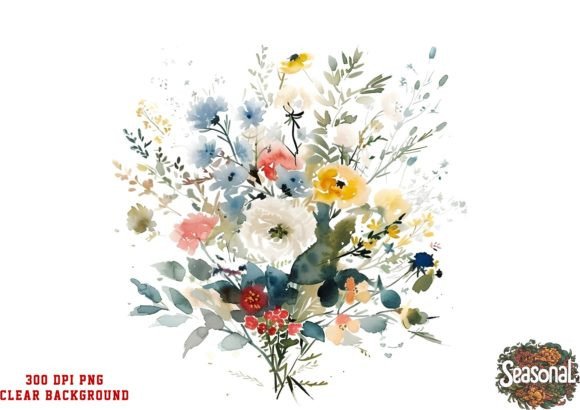
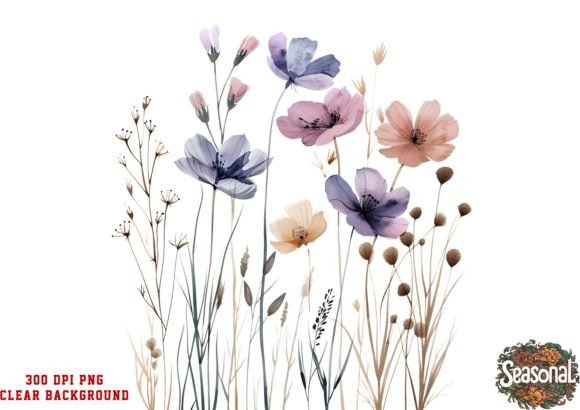
Wildflowers, botanically speaking, are plants that grow without deliberate cultivation. They are resilient, adaptive, and structurally diverse. When rendered in watercolor, these qualities become metaphors. The soft edges of a lupine spike, the translucent petals of a poppy, the fine branching of yarrow—all demand a touch that respects their inherent delicacy. The elegance arises not from rigid botanical accuracy alone but from the dialogue between the artist's hand and the medium's behavior.
Practitioners quickly learn that paper selection, pigment quality, and water control are not afterthoughts; they are foundational decisions. A 100% cotton, cold-pressed sheet holds water differently than a hot-pressed or cellulose alternative, affecting how wildflower shapes bloom or feather. Professional-grade pigments offer higher lightfastness and more vibrant staining power, which matters when layering washes for depth. These material realities directly influence whether the final piece achieves that sought-after elegance or lands somewhere closer to muddy confusion.
Why Wildflower Motifs Resist Predictability
Unlike a formal garden, a wildflower meadow has no grid. Its charm is in its apparent randomness. Translating this into watercolor requires an understanding of compositional asymmetry. The artist must decide where to let pigment pool freely and where to impose restraint. The most successful elegant wildflower watercolor compositions often balance a few sharply defined focal flowers against softer, fading background washes, creating a sense of depth that mimics how the eye moves through a natural landscape. The trick is to make the deliberate look effortless—a paradox that lies at the heart of the medium's appeal.
Applications Across Professional and Personal Contexts
The visual vocabulary of elegant wildflower watercolor has expanded far beyond the studio. It now appears in contexts that range from commercial branding to therapeutic practice, each application drawing on a different aspect of its character.
Branding and Visual Identity
Businesses in wellness, hospitality, and organic products increasingly turn to watercolor wildflower motifs to signal authenticity, softness, and natural connection. A logo rendered in this style communicates a handmade quality that vector graphics often lack. Stationery suites, packaging labels, and website headers using elegant wildflower watercolor elements create an immediate emotional resonance. Consumers perceive them as artisanal, thoughtful, and aligned with values of sustainability and mindfulness. For a small-batch skincare brand or a boutique wedding planner, this visual language can differentiate them in crowded markets without saying a word.
Interior Design and Fine Art Prints
Large-scale elegant wildflower watercolor prints have become staples in modern interiors. They bridge the gap between minimalism and maximalism—soft enough to suit a neutral palette, detailed enough to reward close inspection. Designers commission original pieces or license existing works to create focal points in living rooms, bedrooms, and commercial lobbies. The versatility of wildflower subject matter means the same artist’s work can complement a Scandinavian-inspired space or a bohemian one, simply by adjusting the color palette and scale.
Digital and Social Media Content
Content creators, especially in lifestyle and creative fields, use watercolor wildflower motifs as backgrounds, overlays, and accent elements. The format translates beautifully to video—time-lapse recordings of a wildflower wash developing on paper attract high engagement on platforms like Instagram and TikTok. Tutorials focused on achieving elegant wildflower watercolor effects consistently perform well because they offer both entertainment and teachable skill. The visual softness aligns with current aesthetic preferences for calm, organic, and non-aggressive visuals.
Education and Therapeutic Practice
Art educators and art therapists have long recognized the value of watercolor as a medium for emotional expression. Wildflower subjects reduce the pressure of achieving strict realism while still allowing for recognizable form. Students and clients can explore color mixing, brush control, and compositional balance without the frustration that might accompany portraiture or architectural subjects. The act of painting a wildflower in watercolor demands attention to process over product, which aligns well with mindfulness-based approaches. Educators report that wildflower watercolor projects often serve as breakthrough exercises for learners who believe they lack artistic ability.
Creative Workflows and Technical Considerations
Producing consistent, high-quality elegant wildflower watercolor work requires a practical workflow that bridges traditional technique and modern distribution. Understanding this workflow helps both creators and commissioners set realistic expectations.
From Reference to Finished Piece
Most artists begin with reference material—either photographs, pressed specimens, or live observation. Wildflowers are seasonal, so building a library of references during peak bloom times is essential. The artist then creates a light pencil sketch, focusing on the main structural lines of the composition. The watercolor process typically follows a wet-on-wet approach for soft backgrounds and a wet-on-dry method for detailed foreground elements. Layering is key: each wash must dry completely before the next is applied, or colors will muddy. Patience is not optional; it is a technical requirement.
Digitization and Reproduction
Original elegant wildflower watercolor pieces intended for print or digital use must be digitized with care. Flatbed scanning at high resolution (600 dpi or above) captures the texture of the paper and the subtle granulation of pigment. Professional photographers sometimes prefer to shoot artwork with cross-polarized lighting to eliminate glare while preserving color accuracy. Post-processing in software like Adobe Photoshop or Capture One involves minimal adjustments—usually just white balance correction and dust removal—because over-editing destroys the organic quality that makes watercolor distinctive.
Licensing and Commercial Considerations
For artists, licensing elegant wildflower watercolor designs to fabric manufacturers, wallpaper companies, or stationery brands can provide a steady revenue stream. The commercial value depends on the distinctiveness of the style and the versatility of the compositions. Patterns that can be tiled seamlessly or that include isolated botanical elements tend to attract more licensing opportunities. Artists should register copyright for their original works and carefully review usage terms in licensing agreements, particularly regarding exclusivity and territory.
Why Elegant Wildflower Watercolor Resonates Now
Cultural trends in visual media move in cycles. The current appetite for elegant wildflower watercolor is not arbitrary; it reflects broader shifts toward slowness, authenticity, and natural connection in a digital-saturated world. As screens dominate daily life, handmade visual elements provide a sensory counterbalance. Watercolor's inherent unpredictability feels human in an era of algorithmic precision. Wildflowers, as subjects, symbolize resilience, adaptation, and unforced beauty—qualities that resonate strongly in contemporary discourse around mental health, sustainability, and personal growth.
Social media algorithms also play a role. Platforms favor content that feels warm, personal, and visually distinctive. Watercolor wildflower imagery stops the scroll precisely because it does not look like a filter. It looks like effort, like skill, like human touch. This perception, whether the piece was created in ten minutes or ten hours, is valuable for brands and creators alike.
Accessibility and the Learning Curve
One reason for the widespread adoption of elegant wildflower watercolor is that the barrier to entry is low but the ceiling is high. A beginner can produce a pleasing loose wash of wildflowers in an afternoon. A master can spend weeks refining a single composition. This spectrum means the style accommodates hobbyists, students, professional artists, and commercial designers. Online tutorials, skill-sharing platforms, and community challenges have democratized access to techniques that were once passed down through formal apprenticeship. The result is a global community of practitioners who continually push the style in new directions.
Practical Considerations for Selecting and Commissioning Work
For those seeking to acquire or commission elegant wildflower watercolor pieces—whether for personal enjoyment, interior design, or brand identity—several factors deserve attention.
Color Palette and Mood
Watercolor wildflower compositions can range from muted earth tones to vibrant jewel tones. The palette should align with the intended setting or brand personality. Soft lavenders, sage greens, and dusty pinks convey calm and romance. Bright yellows, oranges, and cobalt blues suggest energy and optimism. Black ink accents can add structure and contrast, pushing the piece toward illustration rather than pure wash painting. Reviewing an artist's portfolio for color consistency and pigment handling is the most reliable way to assess fit.
Scale and Format
Consider the final display or use context. A small elegant wildflower watercolor study may work beautifully as a greeting card or a social media avatar but could feel lost on a feature wall. Conversely, a large panoramic piece requires strong compositional bones to avoid looking empty or chaotic. Artists often work in series, offering multiple sizes and orientations that allow clients to match specific spaces. Custom commissions are common, but they require clear communication about reference materials, palette restrictions, and timelines.
Care and Preservation
Original watercolor is sensitive to light, humidity, and handling. Framing under UV-protective glass, using acid-free mats, and avoiding direct sunlight are essential for longevity. Prints on archival paper or canvas offer more durability for high-traffic areas while retaining the visual character of the original. Clients investing in elegant wildflower watercolor originals should factor preservation into their budget and placement decisions.
The Intersection of Tradition and Innovation
While watercolor is an ancient medium, its application to wildflower subjects continues to evolve. Contemporary artists experiment with mixed media—combining watercolor with ink, gouache, gold leaf, or digital post-processing. Some create animated wildflower watercolor pieces for digital display, where petals appear to drift across the screen. Others use data visualization techniques, mapping wildflower bloom cycles onto abstract watercolor forms. These innovations keep the style relevant without sacrificing the qualities that define it: grace, unpredictability, and a deep connection to the natural world.
The growing interest in botanical illustration as a form of scientific communication also feeds into elegant wildflower watercolor. Conservation organizations and nature journals increasingly use watercolor illustrations in their outreach materials because the medium conveys both beauty and information without the coldness of a photograph. An illustrated wildflower can show a plant's structure, habitat, and seasonal variation in a single image, educating viewers while evoking wonder.
Building a Practice Around Wildflower Watercolor
For those who wish to develop their skills, consistency matters more than talent. Setting aside regular time for observational drawing, studying color theory, and experimenting with different paper surfaces accelerates progress. Many experienced practitioners recommend maintaining a sketchbook dedicated solely to wildflower studies. This practice builds muscle memory for brush strokes and deepens understanding of how different flowers behave under the brush. Over time, the artist develops a personal style that may emphasize looseness, realism, abstraction, or some hybrid of approaches.
The community aspect should not be underestimated. Participating in online challenges, attending workshops, and sharing work for feedback creates accountability and exposes artists to techniques they might not encounter alone. The global network of watercolor enthusiasts is remarkably generous, and wildflower subjects consistently appear as favorite topics across skill levels.
Final Observations on a Growing Aesthetic
Elegant wildflower watercolor occupies a rare space in visual culture. It is simultaneously traditional and contemporary, accessible and sophisticated, personal and commercial. Its versatility allows it to move seamlessly from an artist's studio into a brand's identity, from a therapist's office into a gallery wall, from a beginner's first attempt into a master's lifelong pursuit. The style endures because it does not force itself—it invites. It asks the viewer to slow down, to notice the edge where pigment meets paper, to appreciate the imperfection that makes something unmistakably human.
For professionals and hobbyists alike, engaging with this medium offers more than aesthetic output. It provides a framework for seeing the natural world with greater attention and for translating that attention into a form that others can feel. Whether you are commissioning a piece for a brand, decorating a room, or simply exploring your own creativity, the quiet elegance of a wildflower rendered in watercolor carries a message that needs no explanation. It is beauty that blooms on its own terms.